Will the National Flood Insurance Program expiring on September 30, 2026 stop my Florida closing?

Scott Selleck
Licensed in NJ & FL | The Selleck Group, KW City Views Realty
Want to listen? Here's the summary:
Congress must act by September 30, 2026 or the National Flood Insurance Program lapses. If it does, FEMA cannot issue new or renewal NFIP policies, and closings that need one freeze. Existing policies stay in force, and a seller's policy can often be assigned to the buyer. A lapse stops new business, it does not cancel anyone's coverage. Private flood insurance is unaffected, but the closing table is the problem. Federally regulated lenders require flood insurance in a Special Flood Hazard Area, and during the 2010 lapse the National Association of REALTORS estimated more than 1,400 closings were canceled or delayed every day. Florida holds the largest share of NFIP policies of any state. To protect a Florida closing, ask the seller for their flood policy declarations page the week you go under contract. Under NFIP rules, an insurer may assign the seller's existing policy to the buyer by substituting names, so coverage continues without a new policy being issued, as long as the policy is in force and the carrier confirms the assignment in writing. Florida also has its own rule. Citizens Property Insurance requires flood coverage on personal residential policies that include wind coverage. Inside a Special Flood Hazard Area it applies at issuance or renewal. Outside a flood zone, Citizens phasing it in by dwelling value: five hundred thousand dollars and above in 2025, four hundred thousand and above as of January 1 2026, and every policy with wind coverage regardless of value on January 1 2027. That part catches cash buyers. NFIP residential coverage caps at 250 thousand for the building and 100 thousand for contents, so for a higher-value home you may need an excess flood layer from the private market, priced during attorney review, not after. Insurance costs vary by property, elevation, roof age, construction type, and carrier, so confirm with a licensed Florida insurance agent. Six steps, most of them a phone call, get you to a clear answer on where a September 30 lapse leaves your file.
Copy, paste into Google Translate, click the speaker icon to listen in any language.
For the best listening experience, download the free Google Translate app (iOS or Android).
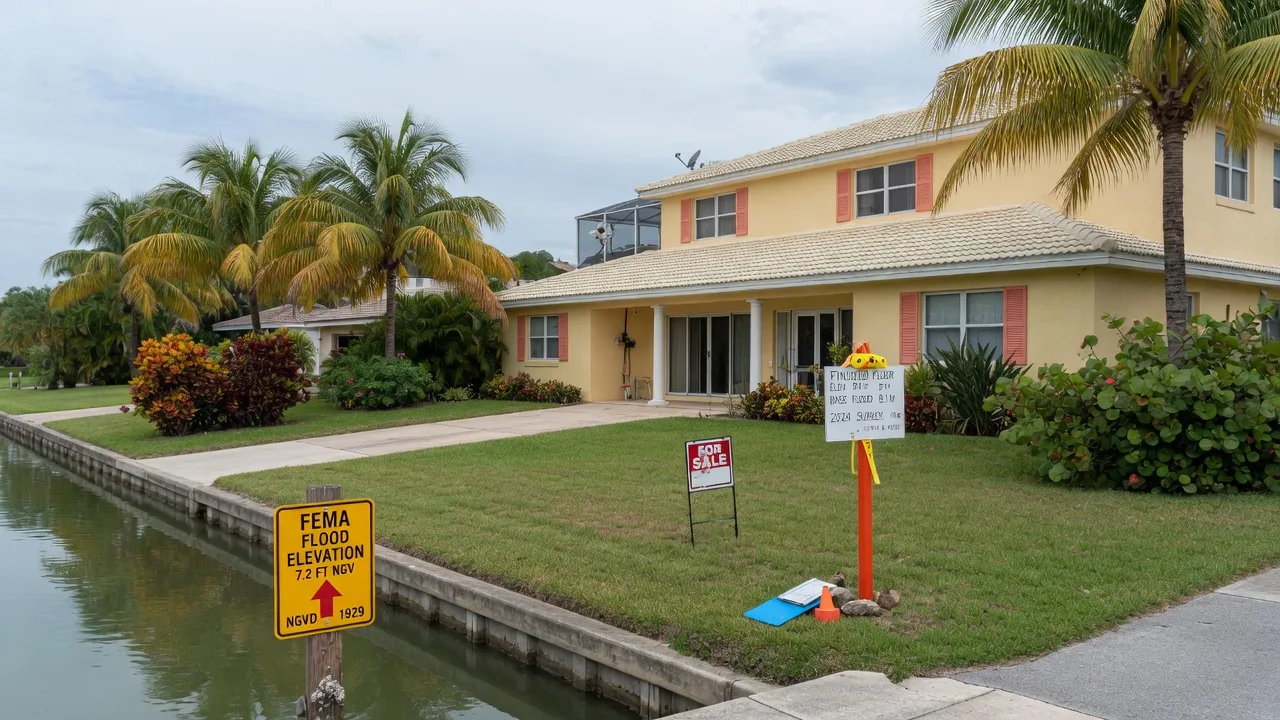
It can. If Congress does not act, FEMA cannot issue new or renewal NFIP policies, which freezes closings that need one. Existing policies stay in force, and a seller's policy can often be assigned to the buyer.
Last updated: August 31, 2026
What a lapse actually does
A lapse stops new business. It does not cancel anyone's coverage. Policies already written stay in effect through their one-year term, including the standard 30-day grace period at renewal. Private flood insurance, which is not backed by the NFIP, is unaffected. The problem is the closing table. Federally regulated lenders require flood insurance on property in a Special Flood Hazard Area, and during the 2010 lapse the National Association of REALTORS estimated that more than 1,400 home sale closings were canceled or delayed every day. Florida holds the largest share of NFIP policies of any state, so a lapse lands harder there.
The first move to protect a Florida closing
Ask the seller for their flood policy declarations page the week you go under contract. Under NFIP rules, an insurer may assign the seller's existing flood policy to the buyer by substituting names, so coverage on the property continues without a new policy being issued. A lapse blocks new contracts. It does not block that transfer. Two things make it work. The policy has to be in force, and the assignment has to be confirmed by the carrier in writing before you get to the table. Verbal assurance from a listing agent is not confirmation.
The Citizens rule most New Jersey buyers miss
Florida has its own flood requirement, and it runs on state rules, not federal ones. Citizens Property Insurance, the state-backed insurer of last resort, requires flood coverage on personal residential policies that include wind coverage. Inside a Special Flood Hazard Area, the requirement applies at issuance or renewal. Outside a flood zone, Citizens has been phasing it in by dwelling value: $500,000 and above in 2025, $400,000 and above as of January 1, 2026, and every personal residential policy with wind coverage regardless of value on January 1, 2027. That is the part that catches cash buyers. You can skip the lender requirement and still be required to carry flood, because your property insurer requires it.
Where the NFIP stops
NFIP residential coverage caps at $250,000 for the building and $100,000 for contents. For a Fort Lee owner trading a condo for a Florida house in the $700,000 range, the NFIP is a floor, not a solution. The gap gets covered by an excess flood layer from the private market, and that layer needs to be priced during attorney review, not after. I will not quote you a number. Insurance costs vary by property, elevation, roof age, construction type, and carrier. Start with the Florida insurance estimator to see which variables drive the number, then confirm with a licensed Florida insurance agent before you remove contingencies.
Six steps if you are closing in Florida this fall
- Pull the flood zone determination on the property this week, and note the FIRM panel.
- Request the seller's flood policy declarations page and ask the carrier in writing whether the policy can be assigned to you.
- If there is no policy to assume, bind before September 30 or get a private flood quote as the backup.
- Confirm whether the property insurer is Citizens, and check the dwelling value against the January 1, 2026 threshold.
- Price the excess flood layer if the rebuild cost exceeds $250,000.
- Build the flood contingency language into the contract before attorney review closes, not after.
Six steps, most of them a phone call. Run them in the first week of the contract and you will know exactly where a September 30 lapse leaves your file.
Read the full breakdown, including the NFIP waiting period waiver that lets a well-run file bind late, and what to ask a licensed Florida insurance agent about the policy types that apply to your property.
I am a licensed real estate agent, not an insurance agent, a tax advisor, or an attorney. Confirm coverage requirements and policy terms with a licensed Florida insurance agent, and confirm residency dates and tax treatment with your CPA before acting on them.
Take the Quiz, Then Book a Call
Not sure which Florida town fits your file? The 7-question Selleck Client Resource Hub quiz matches your lifestyle, budget, and priorities to the right destination, then you can walk through the numbers with Scott.
Scott Selleck, Broker / Sales Associate, The Selleck Group, KW City Views Realty
2200 Fletcher Avenue, Suite 502, Fort Lee, NJ 07024
Cell: (201) 970-3960 | Office: (201) 592-8900 | scott@sellecksellsnj.com | SelleckSellsNJ.com
Florida: Keller Williams Boca Raton Realty
7280 W Palmetto Park Rd, #110, Boca Raton, FL 33433
Office: (561) 997-0500
NJ Real Estate Broker / Sales Associate License #9236275
FL Real Estate Sales Associate License #SL3588731
Equal Housing Opportunity. Keller Williams City Views Realty and Keller Williams Boca Raton Realty. Each office is independently owned and operated.
This content was created with AI assistance and reviewed for fair housing compliance.